Exploring Nutritional Guidelines and Principles
An objective review of common nutritional principles as documented in public health literature and nutritional science research. Presented as concepts and observations, not as individual recommendations.
The Concept of Balanced Plate Proportions
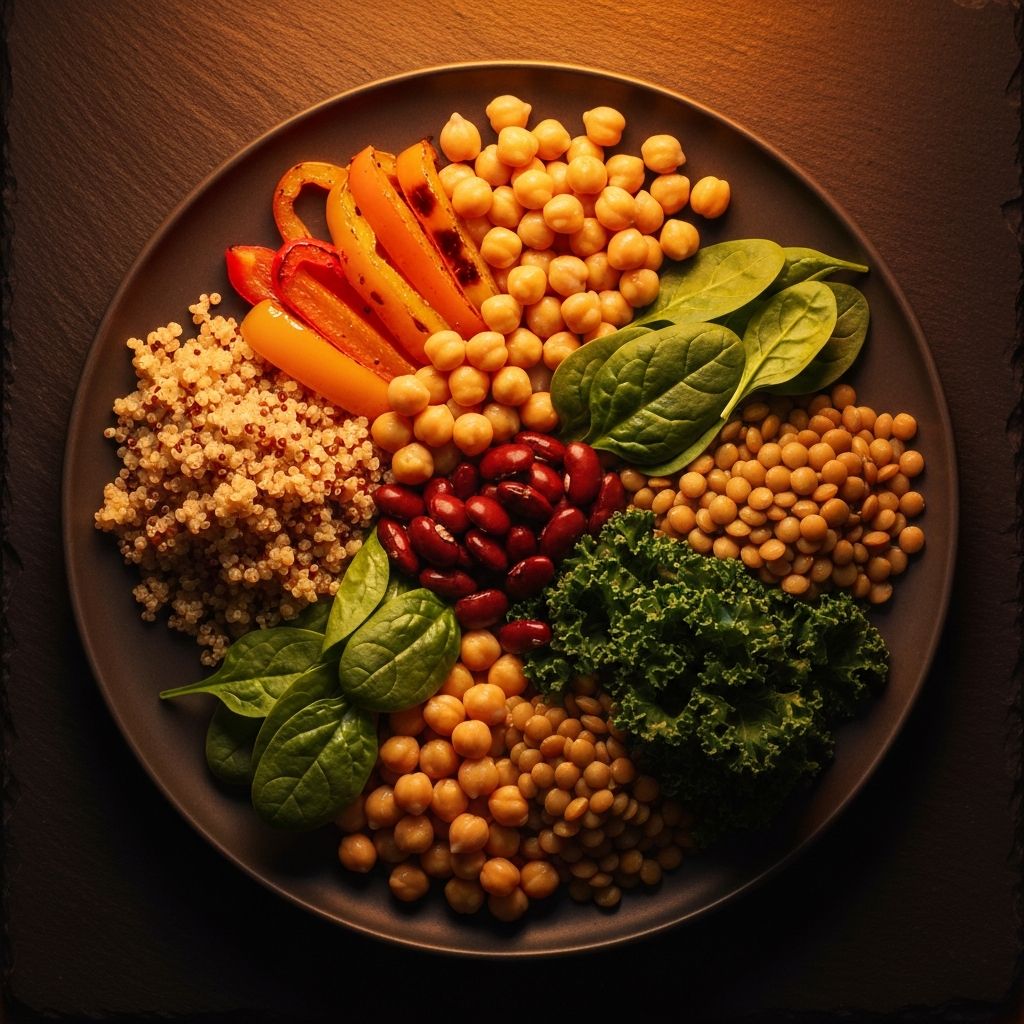
One of the most widely communicated frameworks in public health nutrition is the concept of proportional plate composition. Various national health bodies have developed visual models — commonly referred to as "food plates" or "food pyramids" — that depict recommended proportional relationships between different food categories within a single meal.
These models generally suggest a significant proportion of the plate dedicated to vegetables and fruits, a moderate portion for grains or starchy carbohydrates (with whole grain variants typically distinguished), and smaller allocations for protein sources and dairy or alternatives.
The underlying rationale of such frameworks relates to energy distribution, micronutrient diversity, and dietary fibre intake across a day's eating pattern. The specific proportions vary between national guidelines, reflecting differences in food availability, cultural context, and evolving research consensus.
Understanding Calorie Density
Calorie density refers to the amount of energy provided per unit weight or volume of food. It is a descriptive characteristic of food composition rather than an evaluative judgement of a food's suitability.
Low Calorie Density Foods
Foods with high water content and low fat content, such as leafy vegetables, cucumbers, tomatoes, berries, and broths, provide relatively fewer calories per gram. They constitute a significant proportion of the dietary pattern in numerous cultural traditions.
Moderate Calorie Density Foods
Cooked whole grains, legumes, fruits, and starchy vegetables occupy a middle range. Their combination of carbohydrate content, fibre, and water contributes to their satiety characteristics as described in nutritional literature.
High Calorie Density Foods
Nuts, seeds, oils, and dried fruits provide concentrated energy in smaller volumes. They are valued in nutritional literature for their fatty acid profiles and micronutrient contributions, and are typically consumed in smaller quantities within diverse dietary patterns.
Calorie density is one of several nutritional characteristics examined in dietary research. It is most meaningfully understood in combination with other factors such as nutrient density, dietary fibre content, and the overall composition of a dietary pattern over time.
The Role of Dietary Fibre in General Health
Dietary fibre is a term encompassing a range of plant-derived carbohydrates that resist digestion by human enzymes in the small intestine. It is classified into two broad categories — soluble and insoluble fibre — which behave differently in the gastrointestinal tract and are found in varying proportions across plant foods.
Soluble fibre, found in oats, legumes, apples, and certain seeds, forms a gel-like substance in water. Insoluble fibre, found in whole wheat products, vegetables, and the skins of fruits, contributes to digestive transit and stool bulk. Many whole plant foods contain both types.
Primary Food Sources of Dietary Fibre
- — Legumes: lentils, chickpeas, black beans, split peas
- — Whole grains: oats, barley, quinoa, whole wheat, brown rice
- — Vegetables: broccoli, artichokes, Brussels sprouts, carrots
- — Fruits: berries, pears, apples (with skin), figs, avocado
- — Seeds: chia seeds, flaxseeds, psyllium husk
Fibre in Nutritional Research
Dietary fibre is one of the most extensively studied components of food in relation to digestive physiology and broader health patterns. Population studies have examined the associations between fibre intake levels and various health outcomes across diverse global demographics.
The gut microbiome — the community of microorganisms residing in the large intestine — is a particular area of current research interest. Certain fibres, classified as prebiotics, serve as substrates for beneficial microbial populations, producing metabolic byproducts that are the subject of ongoing scientific investigation.
Public health dietary guidelines in most countries include specific reference to dietary fibre, often noting that average intake in industrialised populations tends to fall below commonly cited reference values. The primary dietary sources of fibre are whole plant foods.
Contextual Note
The information on this page is presented as educational context drawn from public health and nutritional science literature. It does not constitute individual dietary guidance. Consult a qualified nutrition professional for personal dietary assessment.
The Importance of Varied Food Intake
Dietary variety is consistently cited across nutritional frameworks as a central principle of food adequacy. The rationale relates to the distribution of essential nutrients across different food groups and the limitations of any single food type to provide all required vitamins and minerals.
Colour Diversity
Different pigments in plant foods correspond to distinct phytonutrient profiles. A range of colours across fruits and vegetables is used as an accessible heuristic in public health communication about dietary variety.
Protein Source Diversity
Different protein sources offer varying amino acid profiles, fatty acid compositions, and micronutrient contributions. Research examines how combinations of plant and animal proteins across a dietary pattern relate to amino acid adequacy.
Seasonal Variation
Historically, seasonal availability naturally introduced variation in dietary patterns. Contemporary nutritional research examines how seasonal food choices relate to nutrient timing and the environmental dimension of dietary sustainability.
Preparation Method Variation
The same ingredient prepared using different techniques may yield distinct textural properties, flavour profiles, and nutrient bioavailabilities. Dietary patterns encompassing diverse preparation methods are associated with broader sensory and nutritional range.
Observed Dietary Patterns Across Cultures
Nutritional epidemiology examines dietary patterns at population level, identifying characteristic eating habits across geographic regions and cultural traditions. Several of these patterns are extensively documented in scientific literature.
Mediterranean-Type Dietary Patterns
Characterised by high consumption of vegetables, fruits, legumes, whole grains, and olive oil, with moderate fish and low red meat consumption. Documented extensively in research examining long-term dietary behaviours in Southern European populations.
Traditional East Asian Dietary Patterns
Typically featuring rice as a staple carbohydrate source, alongside vegetables, fish, soy-based products, and fermented foods. Research has examined the nutritional composition of traditional Japanese, Korean, and Chinese dietary patterns.
Latin American Traditional Patterns
Traditionally centred around maize, beans, and a diversity of local vegetables and fruits. The complementary amino acid profile of maize and legumes has been noted as a nutritionally significant combination in plant-based dietary research.
Nordic Dietary Patterns
Characterised by whole grain rye and barley, root vegetables, berries, fatty fish, and dairy. The New Nordic Diet has been the subject of formal nutritional research examining its macronutrient and micronutrient profile.